The Complete Structure of the Course
The program is designed for step by step progression, from solid foundations to complete projects.
You can revisit any lesson at any time and watch the videos in any order
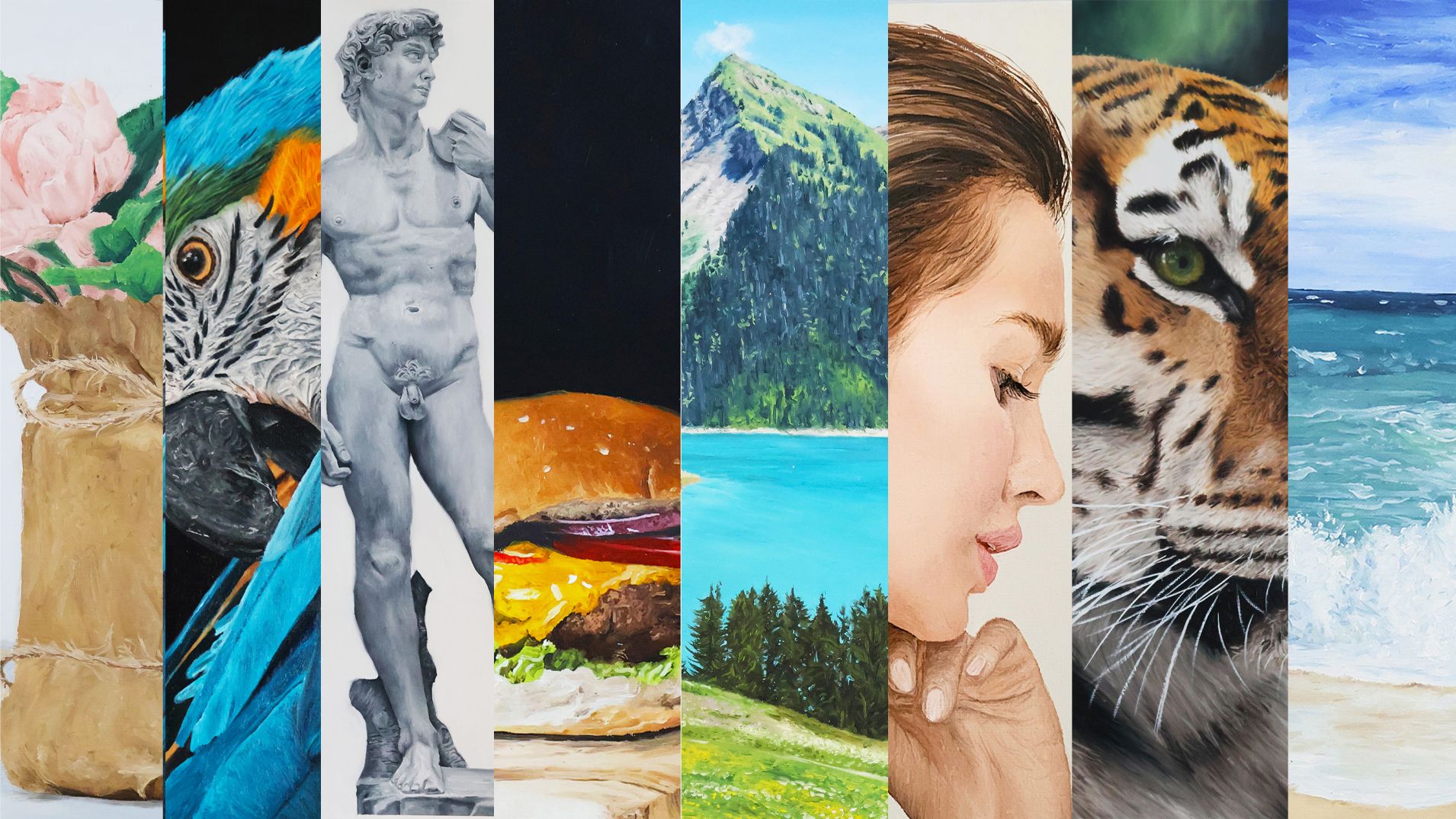
The Complete Painting Course
-
The Fundamentals of Painting - Basic Gestures
20 lesson- Welcome !
-
The basic gestures
- 1. Choosing the right materials without breaking the bank
- 2. How to apply paint properly and control your brush
- 3. How to clean your brushes
- 4. How to clean your palette
- 5. How to paint a flat, even background
- 6. Creating a smooth blend between two colors
- 7. A practice exercise to improve blending
- 8. How to create your medium and follow the fat over lean rule
- 9. How to use Liquin
- 10 How to sign your artwork
- 11. How to varnish your painting
- 12. How to create an accurate drawing before painting
- 13. The grid method
- 14. A practice exercise to better master the grid method
- 1st Practical Exercice - Painting with only two colors
-
Basic gestures – adaptations for acrylic painting
- 2 - How to apply paint properly and control your brush
- 3 - How to clean your brushes
- 8 - The acrylic medium
- 9 - The alternative to Liquin
-
Master Color Mixing
13 lessons-
Master color and learn how to mix any color
- 1 - Introduction
- 2 - Vocabulary and definitions
- 3 - Drying time
- 4 - Mixing primary colors
- 5 - Mixing complementary colors
- 6 - Mixing all colors together
- 7 - Mixing any color: theory
- 8 - Mixing any color: demonstration
- 9 - Darkening or lightening a color
- 10 - Creating black
- 11 - How to create beige
- 12 - How to create brown
- 13 - Conclusion on color
-
-
Practical Exercises
10 lessons-
Practical exercises to improve
- 2 - An exercise to paint what you really see
- 3 - Understanding the difference between a hard edge and a soft edge
- 4 - Painting an egg in black and white, then in color
- 5 - Painting a sphere and creating volume
- 6 - How to paint a white object
- 7 - An apple in 5, 10, 20 brushstrokes
- 8 - The upside-down cup
- 9 - Painting blur
- 10 - Painting drapery
- 11 - The orange ribbon
-
-
Our first complete subject: a beautiful composition!
5 lessons-
Our first complete subject: a beautiful composition!
- 1 - Introduction and composition planning
- 2 - Materials for this painting
- 3 - Colors of our subject and painting the amphora
- 4 - Painting the flower
- 5 - Painting the background
-
-
Painting Animals
142 lessons- How to make progress when you have little time
- Working specifically on fur
-
The cat
- 1 - The cat: subject presentation
- 2 - Planning and organization for painting the cat
- 3 - The cat’s colors
- 4 - What does my drawing look like?
- 5 - Painting the eye
- 6 - The eye, part II
- 7 - Fur on the right side
- 8 - Fur on the right side, part II
- 9 - The ridge of the nose
- 10 - Fur on the left side
- 11 - The muzzle
- 12 - The whisker area
- 13 - The mouth and body area
- 14 - The background
- 15 - Painting the whiskers and final result
-
The dog
- 1 - The dog: subject presentation
- 2 - The dog: planning and organization of the painting
- 3 - Colors of the eyes, mouth, and muzzle
- 4 - Painting the eyes
- 5 - Painting the muzzle
- 6 - Painting the tongue
- 7 - Background colors
- 8 - Painting the background
- 9 - Fur colors
- 10 - Fur around the eye
- 11 - Fur toward the ear
- 12 - The white area
- 13 - Confusing fur on the left side
- 14 - Lower fur
-
The horse
- 1 - The horse: subject presentation
- 2 - The horse’s colors
- 3 - The horse’s eye
- 4 - Around the eye
- 5 - The upper part of the head
- 6 - The ear
- 7 - Along the head
- 8 - The area under the eye
- 9 - The right side of the head
- 10 - The right side of the head, part II
- 11 - Fur up to the muzzle
- 12 - The muzzle
- 13 - The neck
- 14 - The mane
- 15 - The chest
- 16 - Background colors
- 17 - The background
- 18 - Final details
-
The lion
- 1 - Presentation of our subject: the lion
- 2 - Planning and organization of our lion painting
- 3 - The black background
- 4 - Eye colors
- 5 - The left eye
- 6 - The right eye
- 7 - Fur colors
- 8 - Under the right eye
- 9 - Above the right eye
- 10 - The forehead
- 11 - Above the left eye
- 12 - The nose area
- 13 - Under the left eye
- 14 - The whisker area
- 15 - Muzzle colors
- 16 - The muzzle
- 17 - Colors of the upper mane
- 18 - The upper mane
- 19 - Colors of the mane on the sides
- 20 - The right mane
- 21 - The goatee
- 22 - The lower mane
- 23 - Final details
-
The elephant
- 1 - Subject presentation
- 2 - Organization of the elephant painting
- 3 - What does my drawing look like on the canvas?
- 4 - The eye
- 5 - The outline of the eye I
- 6 - The outline of the eye II
- 7 - The trunk I
- 8 - The trunk II
- 9 - The trunk III
- 10 - The difficult corner of the eye
- 11 - The upper part of the elephant
- 12 - The left side
- 13 - The remaining lower part
-
The tiger
- 1 - Subject presentation: the tiger
- 2 - Organization of the tiger painting
- 3 - Eye colors
- 4 - The eyes
- 5 - Fur colors
- 6 - The tiger’s nose
- 7 - The area above the eye
- 8 - The ear
- 9 - The area under the eye
- 10 - The whisker area
- 11 - The muzzle
- 12 - The mouth
- 13 - An interesting spot
- 14 - The left ear
- 15 - Fur on the left side
- 16 - Lower fur
- 17 - The background
-
The hummingbird
- 1 - Subject presentation: the hummingbird
- 2 - Organization of the painting
- 3 - Fur colors
- 4 - The eye and the beak
- 5 - The area around the head
- 6 - The end of the eye area
- 7 - The violet area
- 8 - The body, part I
- 9 - The body, part II
- 10 - The body, part III
- 11 - The tail
- 12 - The wing
- 13 - The wing, part II
- 14 - Mixing intense colors
- 15 - Continuing the head
- 16 - Continuing the head, part II
- 17 - The magenta area
- 18 - Continuing the tail
- 19 - Background colors
- 20 - Painting the background
- 21 - Painting the background, part II
-
The parrot
- 1 - Subject presentation: the parrot
- 2 - Organization of the parrot painting
- 3 - Blue colors of the parrot
- 4 - Painting the background and the first feathers
- 5 - Large blue feathers
- 6 - Continuing the blue feathers
- 7 - Curved blue feathers
- 8 - Mixing the other feather colors
- 9 - Feathers on the top of the head
- 10 - Orange feathers
- 11 - Green feathers
- 12 - The black area
- 13 - Colors of the remaining areas
- 14 - The eye
- 15 - The gray area
- 16 - The gray area II
- 17 - The gray area III
- 18 - The gray area IV
- 19 - The beak
-
Painting Portraits
89 lessons- How to make progress when you have little time
- A special portrait: with clearly defined areas
-
Painting the different elements of the face
- The mouth
- The nose
- The eye in black and white, part I
- The eye in black and white, part II
- The eye in color, part I
- The eye in color, part II
- Skin texture: a specific study
-
David’s head
- 1 - David’s head: subject presentation
- 2 - David’s head, part I
- 3 - David’s head, part II
-
The white man
- 1 - The man facing forward: subject presentation
- 2 - The man facing forward: organization of the painting
- 3 - Eye color
- 4 - The first eye
- 5 - The second eye
- 6 - Skin color
- 7 - The left eyelid
- 8 - The right eyelid and eyebrow
- 9 - The forehead
- 10 - The left eyebrow
- 11 - The lower right eyelid
- 12 - Painting the cheek
- 13 - The nose
- 14 - The ear
- 15 - Hair color
- 16 - Painting the hair
- 17 - Hair, part II
- 18 - The beard and mustache
- 19 - Lip color
- 20 - The mouth
- 21 - The background
- 22 - The neck
- 23 - Final hair details
-
The white woman
- 1 - The woman in profile: subject presentation
- 2 - Organization of the painting of the woman in profile
- 3 - Skin color
- 4 - The forehead
- 5 - The eyebrow
- 6 - Eye color
- 7 - The eye
- 8 - The nose
- 9 - Lip color
- 10 - Painting the mouth
- 11 - The cheek
- 12 - The chin
- 13 - Hair color
- 14 - Hair at the forehead
- 15 - The rest of the hair
- 16 - Final hair details
-
The black child
- 1 - The child: subject presentation
- 2 - The child: organization of the painting
- 3 - Skin and eye colors
- 4 - Painting the iris
- 5 - Painting the white of the eye
- 6 - Painting the eyelid
- 7 - Painting the eyelid, continuation
- 8 - The eyebrows
- 9 - The second eye
- 10 - The nose
- 11 - The lower eyelid
- 12 - Painting the cheek
- 13 - The nostrils
- 14 - The ear
- 15 - Mouth colors
- 16 - The mouth
- 17 - The chin
- 18 - Hair colors
- 19 - The forehead and the hair
- 20 - The neck
- 21 - Final hair details
-
The black woman
- 1 - The woman: subject presentation
- 2 - Organization of the painting
- 3 - Mouth and eye colors
- 4 - The eyes
- 5 - The mouth
- 6 - Skin colors
- 7 - The eyelid
- 8 - The forehead
- 9 - The lower eyelid
- 10 - The nose
- 11 - The cheek and the eyelid
- 12 - The ear
- 13 - Under the nose
- 14 - The neck
- 15 - Hair colors
- 16 - The hair
-
The eye of an old woman
- The eye of an old woman
-
Painting The Human Body
51 lessons- How to progress when you have little time
- The woman with a filter
-
The different elements of the body
- The back
- The breast
- The leg
-
The hand
- 1 - Presentation of the subject: the hand
- 2 - The palm
- 3 - The palm, part II
- 4 - The fingers
- 5 - The wrist
-
The woman seen from behind
- 1 - The woman seen from behind: subject presentation
- 2 - Skin colors
- 3 - The back
- 4 - The buttocks
- 5 - The hair
- 6 - The legs
-
The seated woman
- 1 - The seated woman: subject presentation
- 2 - Subject colors
- 3 - The arm
- 4 - The forearm and the hand
- 5 - The leg
- 6 - The foot
- 7 - The left leg
- 8 - The left hand
- 9 - The neck
- 10 - The face
- 11 - The hair
- 12 - The chair
-
The muscular man
- 1 - Subject presentation: the muscular man
- 2 - Color mixing
- 3 - The thighs
- 4 - The calves
- 5 - The feet
- 6 - The pectorals
- 7 - The abs
- 8 - The arm
- 9 - The underwear
- 10 - The head
-
Painting David
- 1 - Subject presentation: David
- 2 - The head
- 3 - The head, part II
- 4 - The pectorals
- 5 - The abs
- 6 - The right arm
- 7 - The left arm
- 8 - The lower abdomen
- 9 - The genitals
- 10 - The thigh
- 11 - The knee
- 12 - The feet
- 13 - The base
-
Painting Still Life
61 lesson- How to make progress when you have little time
-
Painting small elements
- The candle
- Painting glass: the glass of milk
- Painting metal: the hammer
- The apple
-
The rose
- 1 - Subject presentation: the rose
- 2 - Painting the flower
- 3 - Painting the stem
-
A classic composition with lilies
- 1 - Subject presentation: lilies
- 2 - Color mixing
- 3 - The first flowers
- 4 - The final flowers
- 5 - Leaf areas, small flowers, and background
- 6 - The vase
- 7 - Final details
-
The bouquet of flowers
- 1 - Subject presentation: the bouquet of flowers
- 2 - Kraft paper colors
- 3 - The central part of the vase
- 4 - The lower part of the vase
- 5 - The upper part of the vase
- 6 - Flower and leaf colors
- 7 - The flowers
- 8 - The leaves
- 9 - The background
-
Burger and fries: a contemporary still life
- 1 - Burger and fries: subject presentation
- 2 - Organizing the painting
- 3 - Burger colors
- 4 - The bun
- 5 - The shallot and the tomato
- 6 - The cheese
- 7 - The steak
- 8 - The lettuce
- 9 - Finishing the burger
- 10 - The fries and their colors
- 11 - The newspaper and the bowl
- 12 - Wood colors
- 13 - The bowl
- 14 - The wooden board
- 15 - The background
-
A fruity composition
- 1 - Subject presentation: a fruity still life
- 2 - Pomegranate colors
- 3 - Painting the pomegranate
- 4 - Orange colors
- 5 - Painting the oranges
- 6 - Leaf colors
- 7 - Painting the leaves
- 8 - Cherry and date colors
- 9 - Painting the cherries and dates
- 10 - Drapery colors
- 11 - Painting the drapery
-
The final artwork: a modern still life
- 1 - The final artwork: presentation
- 2 - Subject colors
- 3 - The coffee cup
- 4 - The cube and the token
- 5 - The dominoes
- 6 - The dromedary
- 7 - The playing card
- 8 - Colors of the second part of the artwork
- 9 - The spheres
- 10 - The stemmed glass
- 11 - The background
-
Painting Landscapes
47 lesson- How to make progress when you have little time
-
Small subjects to get started
- The cypress
- The cloudy sky
-
The tree
- 1 - The tree: subject presentation
- 2 - Color mixing and painting the trunk
- 3 - The sky
- 4 - The foliage
-
The fog
- 1 - The fog: subject presentation
- 2 - Color mixing and background
- 3 - The area on the left
- 4 - The rest of the painting
-
The field
- 1 - The field: subject presentation
- 2 - Subject colors and painting the sky
- 3 - Distant trees
- 4 - The grass field
-
The snowy mountain
- 1 - The mountain: subject presentation
- 2 - Colors and painting the sky
- 3 - The left side of the mountain
- 4 - The right side of the mountain
-
The rough sea
- 1 - The rough sea : subject presentation
- 2 - The sky: color mixing and painting
- 3 - Sea colors
- 4 - Waves
- 5 - Backwash
- 6 - Sand
-
Sunset over the sea
- 1 - Sunset: subject presentation
- 2 - The sky
- 3 - The sea
-
The calm sea
- 1 - The calm sea: subject presentation
- 2 - Sky colors and painting
- 3 - The sea in the distance
- 4 - The large wave
-
The final landscape
- 1 - The final landscape: subject presentation and painting organization
- 2 - Sky and mountain colors
- 3 - The sky
- 4 - The upper part of the mountain
- 5 - The forest
- 6 - The lower part of the forest
- 7 - The rocky area
- 8 - The slope on the left
- 9 - Lake colors
- 10 - The lake
- 11 - The plain and the beach
- 12 - Field colors
- 13 - Fir trees
- 14 - The house
- 15 - The field